LOLA NENAFilipino Secrets
Launch promo ends in 00:00:00
Lola Nena Filipino Secrets

My mother fed nine of us out of a basket and a clay pot.

Fifty-six old Filipino methods for feeding a family on less — most of them never made it onto the channel, because they take longer to explain than a video allows. Every method costed. Every saving numbered.

Instant download · Yours forever
56
Methods
142
Pages
10
Sections
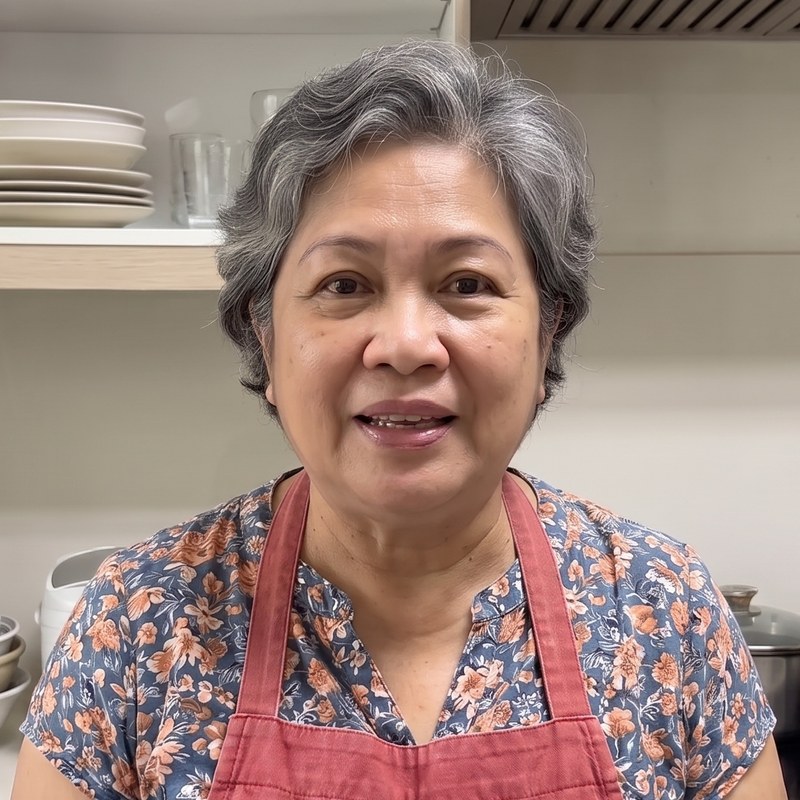
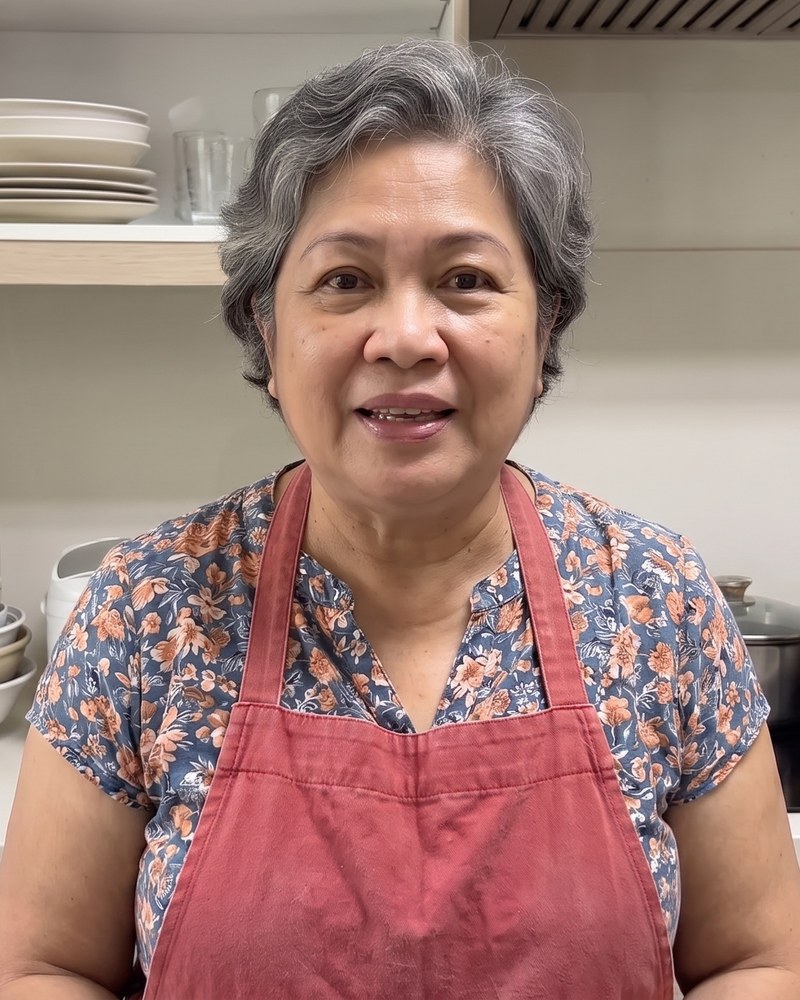
Lola Nena in her kitchen

“There is nothing shameful about a small budget.”

Lola Nena · 74
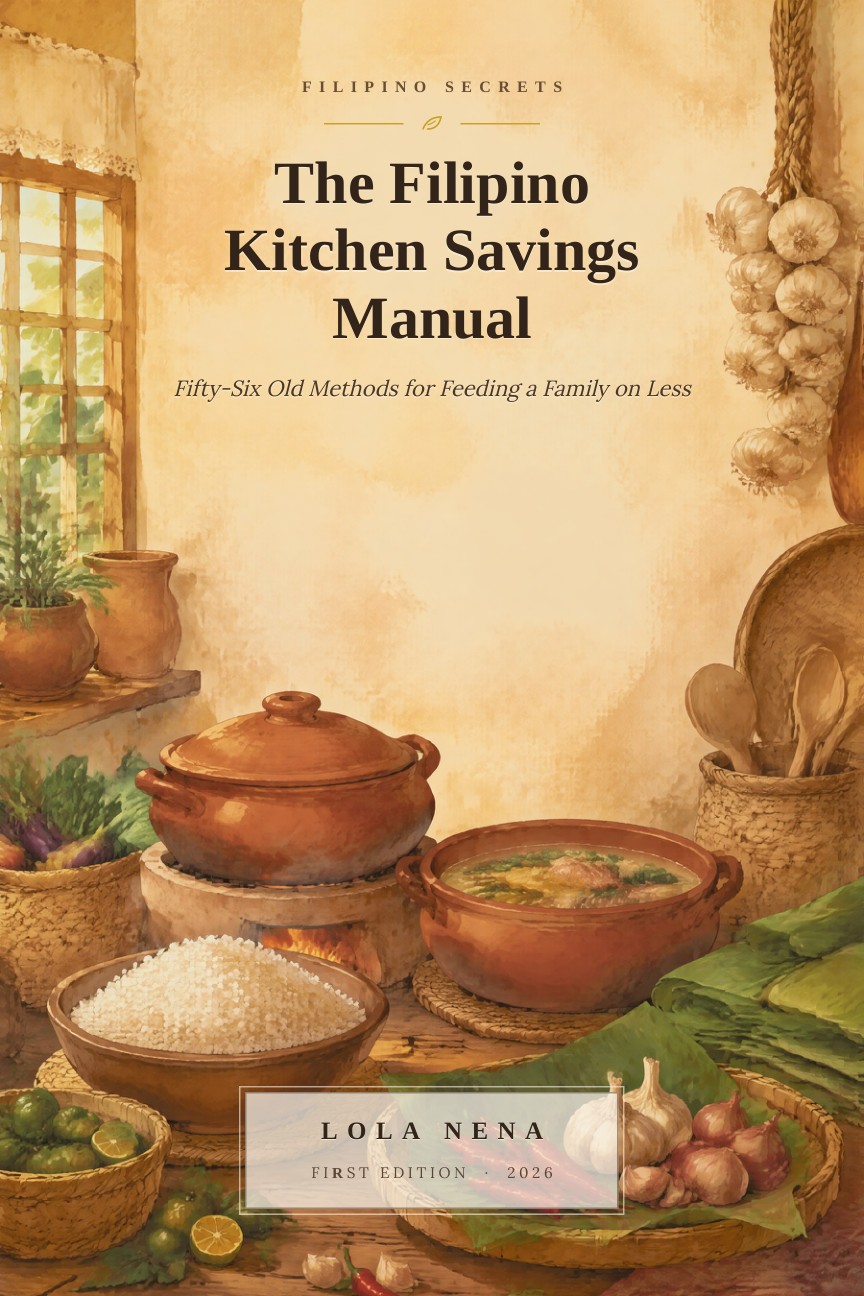
The Filipino Kitchen Savings Manual — cover
I · The Manual

This is a kitchen manual, not a cookbook.

There are recipes in it, but the recipes are not the point. The point is the method underneath them, and the money that method keeps in your pocket at the end of the month.

Some of what is in here comes from the videos I have posted. Most of it goes further than the videos do. A good many of these methods have never been on the channel at all.

“I did not write this book to teach anybody to be Filipino. I wrote it because I have watched too many good families spend money on food they did not have to spend, and then feel ashamed about the state of their kitchen on top of it.”

The food industry has spent fifty years teaching people that cooking is complicated, that flavour comes in a packet, and that anything worth eating costs more than you have. All three are false, and I intend to show you why — one method at a time.

Every chapter is built the same way. It opens with the trouble. Then the method, walked through the way I would walk it through standing next to you at the stove. Then the honest word — what the method does not do, and where it can spoil food if it is done carelessly. Then the arithmetic: what it costs to start, and what it saves you across a year.
II · The Difference

Two kitchens, the same money

Seeing the difference side by side is what makes a method stick. On the left, the kitchen that spends. On the right, the kitchen that does not.

The kitchen that spends
  • Meat is the meal. A kilo of pork, gone in one sitting.
  • Flavour comes out of a seasoning packet.
  • Bones, shells, peels and stems go straight in the bin.
  • A fifth of the shopping quietly rots at the back of the refrigerator.
  • You buy what the list says, at whatever price the shop says.
  • The rice sack runs out early and nobody knows quite why.
  • Cooking from nothing three times a day, tired every night.
The kitchen that does not
  • Meat is a seasoning. A quarter-kilo flavours three days of food.Method 06
  • Flavour is a ginisa base you made in one hour on Sunday.Method 07
  • They go in the scrap bag, and come back a week later as stock.Method 31
  • Nothing sits in front of the ngayon shelf. You see it, so you eat it.The Three-Day Start
  • You walk the market in order, buy tingi, and read a price without a calculator.Methods 37–40
  • Twenty-five kilos is measured, stored properly, and made to last.Method 03
  • Cook once, eat three times. The three-pot week.Method 48
III · What's Inside

Fifty-six methods, grouped by the part of the kitchen they fix

So you can go straight to the trouble you are most tired of. Each chapter is short on purpose — read one with your morning coffee, use it the same day.

I

Rice

A third of what a Filipino household spends on food goes on this one grain. The knuckle. Bahaw. Stretching the sack. Am and tutong.

5 methods
II

The Ulam

The quarter-kilo rule. The ginisa base. Broth nobody charges you for. Adobo as a preserving method. The cheapest fish at the market.

8 methods
III

Gulay

Pinakbet logic. Malunggay, the tree that feeds you for nothing. What keeps two weeks and what does not. Greens you regrow from what you cut off.

5 methods
IV

The Sawsawan Shelf

Three saucers that turn plain rice into a meal. Vinegar from fruit you were going to throw out. Patis, bagoong, fried garlic and chili oil.

4 methods
V

Keeping Food

Drying fish the old way. The salt cure. Atchara. Burong isda. Fifteen things you did not know you could freeze — and keeping food with no refrigerator at all.

8 methods
VI

Nothing Wasted

The scrap bag in full. Yesterday's ulam. Stale pandesal. Using cooking oil three times, safely. Peels, skins and stems that are actually food.

6 methods
VII

The Market

The walking order. Tingi without paying more. The twenty groceries. Reading a price without a calculator. The suki. Six things never worth buying.

6 methods
VIII

Fire and Pot

The palayok, and why clay still wins. Three things on one flame. The hay box. What each fuel actually costs per meal. Cooking when the power goes.

5 methods
IX

The Week

Cook once, eat three times. The twenty-five dollar week. The three levels of the month. Feeding a crowd without panic. Baon that survives until noon.

5 methods
X

Money

The alkansya and the paluwagan. What your kitchen actually costs you. Utang, sari-sari credit and the price of convenience. Teaching the children.

4 methods

And before and after the fifty-six:

  • The Three-Day Start — three fixes to do today. About two hours, under four dollars between them.
  • A Word About The Money — every price written twice, in US dollars and in Philippine pesos.
  • The Kitchen Ledger — the pages for tracking what your kitchen actually costs you.
  • The Sourcing Sheet — where to find the few things the methods ask for.
Get the Manual — Instant Download
Instant download · Yours forever
IV · Reader Results

From the kitchens that have it

★★★★★

“I did the three fixes on a Saturday morning. The refrigerator one alone stopped me throwing out a bag of gulay a week. My husband noticed the receipt before I told him about it.”

Marilou D. · Cavite
★★★★★

“I grew up on this food but nobody ever explained the why. The ginisa base changed my whole week — one hour on Sunday and dinner stops being a decision every night.”

Jenilyn R. · Daly City, CA
★★★★★

“The scrap bag sounded like nothing. Six weeks in I have not bought a single carton of broth, and the soup is better than it ever was.”

Teresita M. · Quezon City
Lola Nena
V · About

Kumain ka na ba?

That is how we ask after each other in this country. Not how are you. Have you eaten. There is a whole way of caring for people buried in that question, and I hope some of it has come through in these pages.

I am seventy-four. I cook in Barangay Sto. Niño, in Quezon Province, in the kitchen you see in the videos. What I have written down is mostly my mother, and her mother behind her, and a long line of women behind that whose names I do not know. None of them thought they were doing anything worth writing down. That is precisely why it nearly disappeared.

“The world has changed around the methods but it has not made them wrong. Rice still cooks to one knuckle. Salt still keeps fish. Bones still make broth.”

I have cooked for eleven people in one house and for one person alone, and I can tell you the second is harder. Cooking is a thing we do for other people, and the money it saves is only the smallest part of what it is for.

Take care of each other. God bless.

Lola Nena
VI · The Manual

Take the whole kitchen with you

The Filipino Kitchen Savings Manual

The Filipino Kitchen Savings Manual

Fifty-Six Old Methods for Feeding a Family on Less
  • The complete manual — 142 pages, illustrated First Edition (PDF)
  • All 56 methods, grouped into 10 sections by the part of the kitchen they fix
  • The Three-Day Start — three fixes, under four dollars, done today
  • The honest word on every method — what it does not do, and where it can go wrong
  • The arithmetic on every method — what it costs to start, what it saves in a year
  • The Kitchen Ledger and The Sourcing Sheet
  • Every price in US dollars and Philippine pesos
$47 $27 USD
Get the Manual — Instant Download
Instant download · Yours forever
Visa · Mastercard · Amex · PayPal · Secure checkout by Gumroad
VII · Questions

Before you decide

Are these really old Filipino methods, or were they invented for a book?

They are the methods I was raised on, set down as they were taught to me — my mother's, her mother's, and a long line behind them. Where a method is regional, or where households do it differently, I say so in the chapter rather than pretend there is only one way.

Your videos are free. Why buy the manual?

A video has to end. Most of these methods take longer to explain than a video allows, so a good many of them have never been on the channel at all. The manual also does the part a video cannot: the numbers. What each method costs to start, and what it saves you across a year, written down where you can check it against your own receipt.

Why only $27?

Because a book about feeding a family on less should not be priced like a book about anything else. The Three-Day Start on page seven costs under four dollars to do, and should pay the manual back before your next grocery run. That is the arithmetic I would want if I were standing on your side of it.

What format is it, and how do I get it?

A 142-page illustrated PDF. You download it the moment you buy — it opens on a phone, a tablet or a computer, and you can print the pages you want to keep by the stove. It is yours to keep.

I am not Filipino. Will any of this work in my kitchen?

Most of it, yes. Rice, bones, salt, oil, vinegar and a scrap bag behave the same in every country. Where a method leans on something you may not find easily — bagoong, green papaya, malunggay — the Sourcing Sheet at the back tells you where to look and what will stand in for it.

Are the prices in pesos or in dollars?

Both. Every price is written first in US dollars and then in Philippine pesos in brackets, at fifty-eight pesos to the dollar. Some of you are in Cavite and some of you are in California, and a book that speaks only to one of you is only half a book.

Some of these methods involve curing and fermenting. Is that safe?

Done properly, these are the methods that kept food safe for centuries before there was refrigeration. Done carelessly, they can make your family sick, and I say so plainest of all in the chapters where it matters. Follow the hygiene steps exactly as they are written, and when a jar looks or smells wrong, throw it out. No method in this book is worth taking a chance on.

Get the Manual — Instant Download
Instant download · Yours forever
Lola Nena
Wait — one thing

Less than one takeout dinner.

That is the whole price of the manual. The three fixes on page seven cost under four dollars to do, and should pay it back before your next grocery run.

Get the Manual — $27 or see what's inside →